
Efficiency in product development
We optimize your product development — reduce costs, accelerate market launch, improve quality.
Our Competence — your solution: An overview of our services
01

Challenges
Are your development costs too high?
Are your products too expensive?
Is development not focused on product costs?
Our solutions
The early stages of product development lay the groundwork for later product costs. We use targeted measures and methods to ensure that our customers recognize and correctly set this course and keep it under control during further development.
The way in which product development is planned and managed has a significant impact on development costs. We ensure that development activities are planned and managed in a cost-transparent and controlled manner.
Practical example
As part of a strategic cost optimization initiative, the product development of a core product was comprehensively realigned to sustainably reduce manufacturing costs. At the start of the project, it became apparent that cost considerations were insufficiently integrated into product conception and the design phase, and that the development of manufacturing costs could not be transparently tracked throughout the entire development process. In addition, interfaces between individual components regularly led to unplanned additional costs, while isolated cost improvements at component level resulted in systemically unrecognized, disproportionate cost increases at the overall product level. Furthermore, the development cost structure lacked sufficient transparency and active management, leaving senior management without a reliable basis for decision-making.
Against this backdrop, the existing manufacturing cost management within product development was first analyzed in detail. Based on this analysis, a specific target state for a future-proof manufacturing cost management approach was designed, defining clear responsibilities, end-to-end transparency, and unambiguous control mechanisms. Subsequently, evaluated measures were defined to systematically support target setting, monitoring, and safeguarding of both manufacturing and development costs. These measures were translated into concrete concepts and pilot applications, tested in selected projects, and rolled out across the organization through a structured implementation accompanied by systematic performance tracking.
As a result, product development today is based on clearly defined targets for manufacturing and development costs that are firmly embedded in the development process. Manufacturing cost targets are consistently broken down to component level, enabling early identification and mitigation of cost drivers, and both manufacturing and development costs play a decisive role in the selection of product concepts. Both cost types are systematically monitored throughout the entire development lifecycle, and deviations trigger timely, predefined countermeasures. Insights gained from the development of manufacturing costs are also systematically reused in quotation processes and subsequent product development projects, enabling continuous improvement of the company’s cost position.
02

Challenges
Are your developments taking too long?
Is your competition developing faster than you?
Are your prototypes not yet ready for important milestones?
Our solutions
Through lean and parallelized processes, intensive and simultaneous collaboration, targeted agility, and avoiding late corrections, the duration can be significantly reduced, to name just a few levers.
Shorter development lead times also mean lower risks, fewer changes during the project, better predictability, fewer resource conflicts, and more completed developments per time period. With the same team size, more parallel product development projects can be handled in the same amount of time, thereby increasing revenue per developer.
Practical example
As part of an optimization project, product development was systematically analyzed and sustainably accelerated. This resulted in a proven reduction of the typical project lead time by more than 30 percent. The starting point was the realization that the period between the start of development and the achievement of series maturity was significantly too long and no longer met market requirements. In addition, it became clear that development processes were often not yet sufficiently stable at the start of series production, leading to reduced yields and increased costs.
During the course of the project, all relevant time drivers within product development were identified and assessed with regard to their influencing factors. In parallel, a market analysis was conducted to precisely capture expectations regarding development duration and schedule reliability. Based on the results, a target operating model was defined that clearly structured the future approach. From this target state, concrete change measures were derived and corresponding implementation concepts were developed. These were prepared in the form of pilot applications, training sessions, and adapted documentation, and were gradually implemented across the development organizations. The introduction was supported by targeted monitoring and accompanying coaching to ensure both the effectiveness and sustainability of the measures.
As a result of this initiative, development lead times were significantly reduced and unnecessary waiting times were eliminated. On-time delivery became a reliable standard, and interdisciplinary collaboration was henceforth aligned through flexible, schedule-driven coordination across all functional areas. The focus shifted from isolated optimizations to a holistic reduction of overall product development duration. Transparent progress reporting and robust schedule forecasts have become an integral basis for management-level decision-making. Task prioritization is now coordinated and strategically aligned across all interfaces. The introduction of Kanban and pull systems supports a continuous workflow. Overall, the project made a decisive contribution to increasing the efficiency, predictability, and competitiveness of the development organization.
03

Challenges
Are the quality costs of manufacturing new products high?
Are you struggling with high friction losses when transferring development results to production?
Do you only recognize quality problems at a late stage?
Our solutions
The quality requirements of all parties involved are managed comprehensively and from the outset as an integral part of development, for example within the framework of maturity models. Quality-related risks are identified and eliminated at an early stage.
The transfer of development results to series production runs more smoothly, making it easier to plan the start of series production and reducing quality costs and rework expenses.
Practical example
As part of a cross-functional optimization project, the existing development process was comprehensively analyzed and fundamentally redesigned to sustainably increase efficiency, transparency, and outcome quality. The focus was on improving the methods, tools, and project management control mechanisms in use, complemented by the introduction of interdisciplinary and cross-site communication as well as structured collaboration among the involved functional areas. In parallel, the quotation and proposal process was systematically optimized with regard to lead time and cost efficiency, enabling faster and more economical responses to customer requirements.
To support this transformation, a value stream analysis tailored specifically to product development was applied and followed by a redesigned process model. In addition, structured problem-solving approaches and professional risk management were introduced. Incremental planning methods and close-meshed progress tracking were established to enable early identification of deviations and timely corrective actions. Binding communication standards and rules ensured that relevant information was made available promptly, appropriately, and completely to all stakeholders. Targeted coaching of project managers and line managers anchored the new ways of working in day-to-day leadership practices and significantly increased acceptance of the changes.
As a result, quality-related costs during the production handover and in series production were significantly reduced, with positive and sustainable effects on all subsequent projects. At the same time, overall resource requirements decreased, leading to a measurable increase in potential revenue per engineer. The principles of Design to Cost and Design for Manufacturing were consistently strengthened, directly resulting in lower manufacturing costs and improved product profitability.
Furthermore, the time to market and the time required to reach the break-even point were reduced, enabling the project to make a direct contribution to improving return on capital employed. Continued coaching of project and line managers significantly enhanced problem-solving capabilities across the organization. Consequently, both the number and severity of issues arising during project execution were noticeably reduced, further strengthening the predictability and reliability of development projects.
04

Challenges
Are you unable to exceed your customers’ expectations?
Do you have problems responding flexibly to incomplete or frequently changing customer requirements?
Does your organization find it difficult to involve customers in product development?
Our solutions
Our development activities focus closely on customer needs and respond flexibly and quickly to change requests.
We show our customers how they can quickly and purposefully develop the right products and inspire their customers, even when requirements are unclear or incomplete.
Practical example
As part of a transformation project aimed at increasing organizational agility, the existing product creation process was comprehensively realigned. The starting point was the observation that the market demands a significantly higher degree of flexibility, transparency, and stakeholder involvement during product development, and that product requirements are increasingly defined not upfront but collaboratively during the development process itself. The existing product development and innovation processes were no longer able to meet these requirements in a cost- or time-efficient manner, particularly as changing business models introduced new customers, new requirements, and new rules of competition. As a result, employees were compelled to deviate from defined processes in order to meet deadlines, leading to a multitude of individually practiced, undocumented process variants.
To address these challenges, both the documented and the actually practiced product development processes were systematically analyzed. In parallel, an in-depth analysis of market requirements with regard to agility was conducted in order to derive clear target states for responsiveness, customer involvement, and transparency. Based on these insights, a specific agile target state for product development was designed and translated into evaluated change measures. Implementation preparation included concepts, pilot applications, training programs, the qualification of internal agile coaches, supporting documentation, and additional measures as required. The measures were then rolled out across the organization and their implementation was supported by structured monitoring and ongoing coaching.
As a result of the project, empirically derived insights from customer feedback now have a decisive influence on product development. Customer needs are met more effectively, while at the same time the avoidance of unnecessary product features generates measurable cost savings. This approach allows the potential customer base to be at least maintained and, in many cases, expanded, as the product creation process is now aligned with the increased demands of the market. At the same time, the attractiveness of the organization as an employer increases, as clear, agile processes provide orientation and enable active employee participation in shaping both products and processes.
Methods for your success

Methods for your success
Lean Development
Lean development describes the application of the lean management philosophy to product development, in particular R&D and project management. A customer-specific and sustainable implementation of lean development promises shorter development times, lower resource requirements and reduced development and product costs.
In addition to many years of R&D industry experience, we also have 15 years of experience in implementing lean management in the development sector, from the implementation of individual methods to the comprehensive transformation of large medium-sized companies.

Systems Engineering
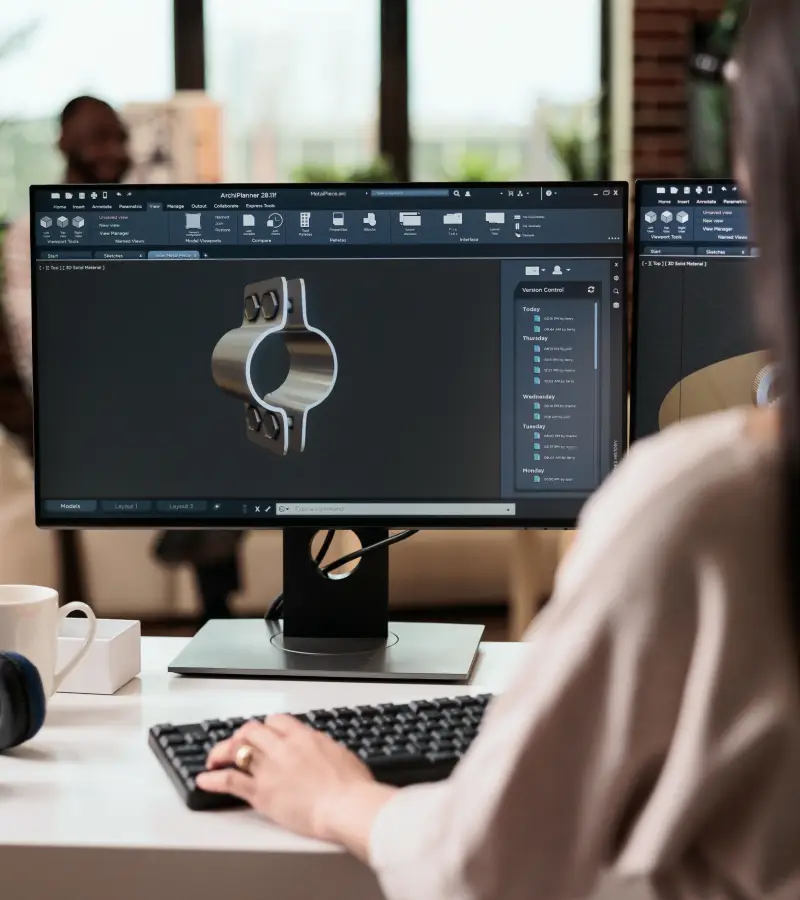
Systems engineering is a methodical approach with which we meet a high level of complexity in product development. The complexity can be caused by the products themselves or by the environment, e.g. the organization. The system analysis comprises components and relationships on several system levels and enables a very structured design and implementation despite a high number of elements and interactions.
Systems engineering can be effectively combined with the other methods mentioned above.
Innovation
A continuous flow of innovation is a basis for long-term success. We shape and support our clients’ innovative success strategically, procedural and operational implementation. Our spectrum ranges from innovation strategy to trend and technology evaluation and idea generation to portfolio-based selection of ideas and operational implementation in innovation projects for successful innovation on the market.
In doing so, we actively involve the company’s employees and managers and drive forward the development of a sustainable innovation culture. As a result, we help to secure the share of sales with innovative new products in the long term.

Agile
Agile development is an empirically based development approach. The approach is aimed at gradually, incrementally gaining experience and making decisions based on this. Established in pure software development for decades, the agile approach is also gaining more and more space in the development of physical products. This trend is supported by the fact that suitable processes and methods have been developed for the prevailing conditions there, such as manufacturing time and costs of prototypes or investments in tools, with which the advantages of agile development can be exploited.

Latest news, cases and exciting topics from the corporate world
Efficient meetings in product development: Lean management principles as the key

What our
customers say:

Dr. Oleinek has excellent practical and methodological experience in the areas of lean management and agile development. He always found systematic and pragmatic solutions and was thus able to make a significant contribution to increasing effectiveness and efficiency. The cooperation between him and the team was always professional, even in difficult change situations, so that the changes could be implemented punctually and jointly.”
During our collaboration, Dr. Oleinek has proven himself to be a proven expert in streamlining product development processes and the associated change work. The most important contributions to the content include the redefinition of the calculation process for offers and changes, but also the realignment of communication in the project teams. Dr. Oleinek’s approach to the necessary changes is characterized by broad knowledge and is proactive at all times. He works in a team-oriented and always integrative manner, thus ensuring the necessary sustainability of implementation. As a consultant and implementation advisor when changing product development processes, I can fully recommend Dr. Oleinek.
Mr. Oleinek supported my project team in testing agile methods. It can clearly convey complex content. His methodological expertise is excellent. In doing so, he is able to combine the team’s methodology and requirements in an excellent way.
Contact us — we will be happy to advise you.
Let’s get in touch! Just write us your wishes and goals. We look forward to discussing your ideas with you in person. We will get back to you after your message.